Dream Play

                     Dreams are today’s answers to tomorrow’s questions.  Edgar Cayce

My copy of Carl Jung‘s autobiographical book, Memories, Dreams and Reflections is so worn and old that the pages are literally falling out.  (Note to self: classic books deserve to be bought in hard cover!).  For some reason Jung’s work struck me the first time I discovered it and it has stayed important to me for nearly 40 years.

Perhaps as compelling to me as anything is Jung’s emphasis on the importance of dreams in our lives.  As readers of this blog might recall, I’ve kept a dream journal for 35 years.  I record dreams I remember and increasingly I take time to see how I feel about them and what the dream is trying to tell me.

Most people, in my experience, claim either that they don’t have dreams or they aren’t able to recall them.  We all dream.  In fact, I believe we dream when we’re awake.  We often call them “daydreams” or fantasies, but they are dreams nonetheless.  They are no different than nighttime dreams, we just happen to be up and active when they occur.

As we get older our dreams have much to tell us about our thoughts and feelings about life.  I think we can all benefit from playing with our dreams, but where to start?  I’ve always told people that, if possible, you have to quit using an alarm clock.  Waking from sleep so abruptly doesn’t allow us to detect the fragments of a dream we’ve had so we can find a thread and follow it to the meat of the dream.

If you’re able to live without an alarm clock, then I suggest a few more things.  As you’re preparing to go to sleep, give yourself the suggestion that you’d like to remember a dream.  Don’t force it, keep it light.  Just suggest to yourself this is what you’d like.  It will probably take some practice, but you might really surprise yourself and remember a “big dream”  (one full of important meaning) right away.  Your psyche might be hungry for the chance to connect.

Also, in the early stages, it’s helpful to have a pen and paper bedside to record snippets of dreams you might recall during the night.  Then you might begin keeping a journal to record the fuller version of the dreams you remember.  Reach for the core of the dream, the strong images and encounters that have the most energy.  Embellish these as you write, giving them detail about surroundings, players in the dream and feelings about the experience.

Once you’ve recorded your dream, there are websites dedicated to dream interpretation, such as Dream Moods and Spirit Community.  By searching key words from the dream you might find a sentence or word that matches what you feel about the dream.  From there you can build the meaning more clearly.

Finally, reality test the dream in waking life.  Recall the images during the day and see if your earlier feelings about them stay the same or if they morph into new, deeper, and even surprising revelations.  Many dreams seem just to rebalance the psyche and help us adapt to current circumstances, but my experience, again, is that many dreams have messages for us that we can use to our advantage if we’re willing to play with them.

Posted in Uncategorized | Tagged , , , , | 2 Comments

Impatience as Greed

                   There art two cardinal sins from which all others spring: impatience and laziness.  Franz Kafka

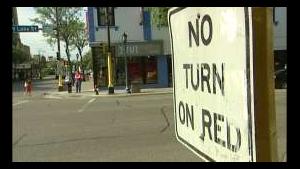
At my father’s funeral many years ago his friend Sonny came up to me and said, “You know, Bob was the kind of guy who would turn right on red even if he wasn’t going that way, just to keep moving.”  It was so true.  Dad and I had worked together for 15 years and, of course, he’d been around my entire life.  He was a very impatient man.

Not long after this I was playing golf when another old friend of the family was in his back yard tending his flower bed full of impatiens.  Marshall, the friend, asked me, “Do you know what I call those flowers?”  No, I replied.  “Caldwell’s.”  So, due to his temperament, Dad had a flower named after him.

Impatience is the inability to endure frustration or annoyance without expressing anger or negativity.  I recognize it in me, do you?  If I’m not getting my way in traffic or in line, I want things to be different, right now.  My time is more valuable than your’s; my needs should be put ahead of those of anyone else stuck in the annoying, frustrating situation.  In short,  I am greedy, which, by the way, is one of the 7 cardinal sins.

These times test our patience.  Annoyances and frustrations are staples of the modern day.  I have the bad habit of reading political articles and opinion in the morning.  It is not helpful for my mood and there’s nothing in the short run I can do about it.  I take in the information and disturb myself and don’t have an outlet for it.  The temptation then is to take it out on those around me.

The Japanese word, wa, has the meaning of harmony and peace.  I think of it often when confronted with something that upsets me.  This is upsetting my wa, how can I change that?  Holidays are coming, it’s the perfect time to make a start at finding our wa because we’ll have plenty of opportunity to test it out.  Wa is as close as the next breath and found only there.

Take a breath.  Breathe.  Let the tension of the moment melt away with the inhale and exhale.  As the Holocaust survivor and author of Man’s Search for Meaning, Viktor Frankl tells us: It is in the ability to pause between stimulus and response and choose that real freedom lies.  Let’s choose wisely this holiday season.  There is much that we do not and cannot control, but choosing our response is one thing we can do, and it is all that is necessary.

Posted in Greed, Impatience | Tagged , , , , , | 12 Comments

Steve Jobs Last Words

It’s been a month since Steven Jobs died.  Architect, inventor, designer, marketer and visionary, Jobs was a part of us boomers’ life for 30 years.  His sister, Mona Simpson, the novelist, didn’t meet her brother until they were both adults.  They became very close for the next 25 or so years and it was Mona who delivered his eulogy.

She records Steve’s last words as, “Oh wow.  Oh wow.  Oh wow.”  He looked past the few assembled people in the room and repeated these words as he faded away.  What did Jobs see?  We’ll never know for sure, but there is a pattern here that has been repeated throughout history.

Thomas Edison’s last words were, “It is very beautiful over there.”  And Stonewall Jackson, after being shot accidentally by one of his own soldiers, is reported to have said, “Let us pass over the river and rest under the shade of the trees.”  A pattern of afterlife beauty and peace emerges.

It seems to me, and I’ve come to believe over the years of study and practice, that our consciousness doesn’t just exist right here, right now in this body.  I believe we come into this physical life for a period of time from a larger consciousness and that we return to it upon death.

This is what Edison, Jackson and most recently Jobs have to tell us.  The feeling of reconnection with that larger consciousness is a feeling of coming home, returning to a place we never truly left.  It must be a state that feels so natural to us that we finally let go of all our pent up resistance, anxiety and regret and once again feel a release and a sense of beauty that inspires awe.

I try to remember this in my daily life.  When I feel myself swinging too far into doubt, fear or anxiety I know I now have a choice.  I can dwell in the negative space for as long as I care to, but all the while there is this larger consciousness of which I am part and to which I will return.  I have access to it now; it’s always my choice.  The larger consciousness is a constant in my life and in that sense, I am never truly alone.

Posted in Uncategorized | Tagged , , , , , , , , , , | 2 Comments

The Inner Gate and the Outer Gate

Having had polio as a child, I was left to deal with the physical and emotional aftereffects.  While I recovered very well physically, I kept finding different ways the illness and hospitalization affected me for years to come.  Seeing a doctor became difficult because I reacted like a turtle, part of me closed up and withdrew instantaneously.  I had no control over it; it just came on like pulling back my hand from a hot stove.  The months of intrusive treatment and handling as a child of 7 left me traumatized.

In order to minimize the contact I had to have with traditional medicine, I found myself studying and using alternative therapies, some of which were amazingly successful.  One modality in particular, acupuncture, was very helpful.  The acupuncturist, Doug Johnson, has an undergraduate degree in psychology and has taught acupuncture at one of the primary American acupuncture schools.  He was a good fit for me and what I needed at the time.

One thing Doug told me that has always stuck in dealing with relationships is the metaphor of “the inner gate and the outer gate.”  He said, we meet people with our heart.  The human connection of person to person, as opposed to role to role, takes place in the first seconds of an encounter, or it doesn’t.  We have an unconscious visceral reaction to each other, for better or for worse.

  • Some people we meet will not get past the outer gate to our heart, our authentic self.  We know we can’t afford closeness in this relationship.
  • Others we meet will be allowed into the space between the inner and outer gates: for a specific purpose, a span of time, or in some rare cases, forever.
  • The inner gate remains closed to all but a select few.  Those who make it through this gate are trusted and cared for, unless and until they prove themselves otherwise.  Most of the time, however, those who make it that close to our heart have earned their way and proven distinctly who they are.

Is there anyone, or anything (a habit, a compulsion, an addiction), in your life currently too close, but shouldn’t be?  Have you let in someone who would be better off outside the inner gate, or perhaps out of your life for good?  Conversely, is there someone who has been excluded from your life who would make a positive difference for you now?  Is there someone you would like to invite into your life but who is outside, looking in?

Perhaps old, outdated reactions have cut you off from a person or a situation that could be useful to you now.  Or, perhaps you’ve kept a relationship that no longer serves and you’d be better off without.  Either way, the path to clarity and balance in your life might pass through a proper evaluation of and action on your relationships.

Posted in Uncategorized | Leave a comment

Living on Kairos Time

                   kairos–Greek: a time in between, a moment of indeterminate time in which something special happens.  Wikipedia

18 years ago on Halloween weekend, I moved to Asheville to take a new job and to live in a place I loved.  As I was preparing to make the move a friend showed me an ad for a rarely available cottage in Biltmore Forest that was for rent.  The only contact information was a post office box, so I sent a letter of interest.

3 weeks went by without a reply and I was looking for something else when I got a call one morning from the owner.  “Robert, this is Mrs. McCarly.  You wrote about the cottage for rent.”  I knew who this woman was because my father had known her husband and had spoken of him before.  Within 2 more weeks, I was moving in.

The place was beautiful!  Hardwood floors, a big stone fireplace, a bright, sunny bedroom all surrounded by 3 acres of forest and a small stream with deer in the yard early in the day and at sunset.  It was just the remedy for some hard times I’d experienced over the prior couple of years.  I was living alone in this natural wonderland with quiet beauty all around.

After I’d been there a while, I noticed a shift in my perception of the world.  Whereas before I’d lived exclusively on “chronos” or chronological time, now I was living more on “kairos” or soul time.  There was a different tempo to my life, a greater appreciation of the passing of the sun across the sky and the beauty of nature that surrounded me.

I wrote an article for Science of Mind Magazine entitled “Living on Kairos Time” that was accepted for publication.  Chronos time is where we all live—by the clock; getting up by the clock, working by the clock, and sleeping by the clock, a relentless cycle.  What I found in the forest in Asheville was healing time, time where the clock was a lesser factor. From my years of participating in men’s groups I know most men, since childhood, have never had the space to just be.  Most men I knew had become human doings, rather than human beings.

Einstein said time and space are pretty much the same thing, so what I was creating in that kairos time, was space.  Chronos time had not led me to a place I wanted to be.  My only option then was to create some space in my life to rethink an assumption that I was having a life, rather than living a life.  The former places me in the role of a victim of fate, of Odysseus on stormy seas, at the mercy of the gods.  The latter places me in charge of my life.  It implies that I can choose the way I will live my life, choosing to be the victim of no man.

The 3 years in the forest taught me many things, but the most important take away was that I created some space in my life.  No longer was there just one way of looking at and thinking about my world and my place in it.  Living in kairos allowed some breathing room.  It gave me the first opportunity in many years to just be and create in myself the life I wanted to live in the next chapter.  In short, I developed a more creative outlook based on enjoying life and I gave up some of the negativity I’d absorbed over my life to that point.   It was, as in all things, a simple (not easy) shift in thought and attention that has made all the difference.

Posted in Uncategorized | Tagged , , , , , | 3 Comments

A Musical Life

Mountain RetreatWhere words fail, music speaks.”
           Hans Christian Andersen

Years ago I went to a retreat center in the far N.C. mountains for a long weekend of meditation and quiet.  A wonderful teacher and wonderful food complemented the beauty of the surroundings and the sense of spiritual connection we all felt during that time.  The only technology was the one wall-mounted, push-button phone in the cramped office just off the kitchen.  This technological wonder was for emergencies only.

While meals were in silence, we did have some free time in the afternoons between meditation sessions and the evening dharma talks.  I took my guitar but didn’t want to play it in the area of the housing because some would be meditating and resting.  So I took off hiking up the steep access road, carrying my bulky guitar case, to find a small cabin suspended over a steep incline I had been told was available for me.

Some of the others wanted to come up also.  I got there first, tuned up and started playing some of my songs on my old Martin while a few others arrived after trekking up the hill.  One of the women was someone I’d met in a prior retreat.  Joan was her name and after a few songs she said, “Listening to you sing your songs is like having someone read their journal to you.”  I told her it is true because the songs are often just another formulation of something I’m experiencing or observing in life.

As I was getting ready to go into high school, a friend said to me at church one Sunday, “I’m starting a band and I want you to be the singer.”  I said, emphatically, “I’ve never sung anywhere.”  He said, “You can do it.”  Thus began a musical life.  I sang for 3 years in “The Counts” before going off to college.  In retrospect, I perhaps should have stayed in the music world.  I can envision myself on stage singing ’60’s rhythm and blues, still selling albums with songs I sang half a century ago.

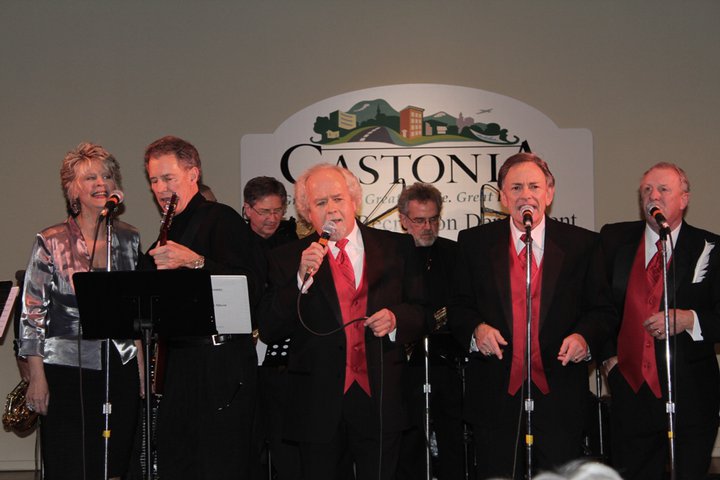
Over the years The Counts have done about 10 reunion concerts, including the one pictured here in early 2011.  I’ve also played and sung with a myriad of other musicians in many configurations of varying degrees of competence.  I even learned to sing operatically for a couple of plays.  In all, while I’ve never made much money from music, I’ve always been appreciative that I kept it up, that I didn’t let it drift away as have so many of my acquaintances along the way.

Today, more than ever, music is a driving force and a core value for me.  What a blessing to have something in our later lives for which we come  a bit more alive!  At the same time I was singing with The Counts, the protest music of the ’60’s emerged and with it the fantastic groups that took music to a place that is still revered and played today.  I knew it was really good stuff at mid-life when my son absconded with my remastered Pink Floyd, “Dark Side of the Moon” album.

What is your music?  What will fill your life and give you something of value to share with others?  What draws you back repeatedly, over time, to meaning and purpose?  A large part of this journey we’re all on is to seek and explore the avenues that life offers.  We co-create with universal forces when we express ourselves through the outlets to which we are drawn.  Paint, sing, write or cook, whatever it is that lights you up is an expression the world needs and a desire you need to express.

Posted in Uncategorized | Tagged , , , | Leave a comment

Journaling as Teacher and Spiritual Path

You’ve either got a spiritual practice, or you’ve got beer and t.v.” Krishna Das

Memories, Dreams and Reflections (MDR) is the name of the book written by Carl Jung, the famous Swiss psychiatrist, in collaboration with Aniel Jaffee.  The book is a biography of Jung’s long, illustrious life that includes tales told and written by Jung himself about his exploration of the human psyche.

I became interested in Jung and his unorthodox view of psychology and the mind when I had just begun working with my father in our textile business.  His work became a beacon for me of how to live life with more purpose and meaning.  When I began journaling in the mid-1970’s I began calling my books of scribbles by the title of the book, because this was a place to capture and explore my own memories, dreams and reflections.

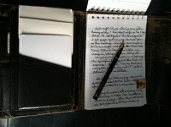
On a business trip to England I met with a customer  who gave me a little gift of a cover for a stenographer’s pad.  It was black with a brass clasp.  I thought the covering was leather, but alas, it was vinyl covered cloth that now looks like this, worn and graying, kind of like its user.

The great thing about this cover is that it holds a steno pad and since I write left handed I didn’t have to deal with the wire bound books designed for right handers.  I’ve used this book now for 35 years, cataloguing encounters, experiences, feelings and insights into over 85 notebooks today.

I remember sitting by myself in a cafe or coffee shop way back then and seeing a guy across from me writing in a notebook.  I projected that he was writing important stuff about life, deep thought and innovative approaches to living.  In conjunction with what I’d just read in MDR I said, “I can do that!”  Right away I got some steno pads and pen and began writing, feeling righteous and like I was doing something important.

Journaling has become for me a matter of spiritual practice.  I don’t do it every day, but if I have a dream I feel is significant, I record it.  If something is going on in my life that puzzles or vexes me (everyday it’s something!), into the journal it goes.  I began a catalogue system that works for me because I quickly lost track of when something was written and how to access it again if I ever wanted to look back on it.  For instance, this current book is numbered #86-11 (journal number and year) along with the start and end dates.  Each book now takes me about 3-4 months to fill.  I can now go back to a time when something similar might have been going on in my life and reread how I worked through it.  This can give me hope that I’ll work through this issue as well, and I try not be bummed out by the difficult feelings and emotions I expressed way back then.

Another important part of journaling, at least for me, is the writing instrument I use.  At first, I used any Bic or junk pen lying around but the quality of the penmanship was mediocre and inconsistent.  Finally, nearly 24 years ago, I inherited the Sheaffer ink pen pictured here.  It has just the right heft, balance and nib quality.  It has become a consistent friend and tool.  I found, however, that if I carry it on a plane, the pressure forces ink out of the cartridge and into the pocket of my dress shirt!  I make accommodation for that now by either removing the cartridge or making sure it’s not too full before I board.

Journaling has been a great teacher for me.  It causes me to create a little bit of discipline in my life.  It brings me back to what’s important for me and to me.  Above all, it has given me a touchstone to go back to when things have gotten tough.  If I handled things then, I can do it now, and I’ve got a great resource to help me recall how I did it.  It’s amazing how well I can recall where I was living, who I was surrounded by and what I was doing and thinking for nearly 4 decades now.

Finally, one thing that has thrown many people off journaling is the thought that someone is going to sneak a peek, or worse read whole sections about themselves.  I struggled with this for a while until I came to the firm conviction that what they read about themselves in my books is their business.  There have been many opportunities for people to read my journals, but if they have done so, I’ve never been confronted with it.  If I ever do, then that’s their issue, not mine!

Posted in Uncategorized | Tagged , , | 1 Comment

“We use each other”

Picture a busy restaurant during the lunch rush.  It’s in an old, industrial section of Charlotte in the mid-1970’s south.  Noisy, the smell of well-used grease, a feeling of “I don’t want to see this kitchen”, is pervasive.  But Arno and I are there for lunch.  No matter
that the waitress is busy and rushing around, Arno had to engage her and find out about her life.  Oftentimes the waitress would actually stop and seem to appreciate the interest shown for her and her life.

Early on in our conversations, Arno said, “We use each other.” Like with many of his statements, I was a little shocked. While it was true when I thought about it, saying it out loud would have been frowned up on in my world. But this was part of Arno’s teaching style, a little shock value helped drive home points that would otherwise be passed over.

None of us lives in isolation. We are part of the fabric of the whole of humanity. We exist in relationship, without it there is oblivion. Were it not so, isolation would not be about the worst punishment imaginable. Shunning or excommunication from those who matter to us wouldn’t seem so inhumane.  Being kicked out might otherwise seem like liberation from the tyranny of the majority.

Martin Buber

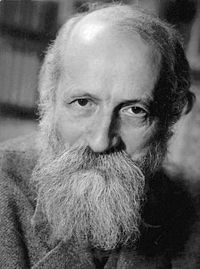
Community is essential to our existence. Relationship, according to theologian Martin Buber, is the essence of life. He said the Divine flows in the interplay, the give and take, between me and you.*  When we come together as equals, dealing with each other as human to human, that flow can occur and thrive.  When we approach each other person in our roles, hiding behind rank or status, we create an inequality in the relationship.  Inequality always chokes off the energy flow.

“Projection makes perception” goes an old psychological adage.  I can only see out there what is within me.  If I don’t have it in me, I won’t recognize it out in the world.  When I see a friend or lover behaving in a way I don’t like, I’m finding fault or feeling a sense of lack, not only with them, but within myself.  On the other hand when I see my partner in this cosmic dance “perfect-as-is” I’m also feeling that way about myself.  We use each other as mirrors into our own psyches.

If I want to see the best in myself and develop qualities I admire, there is no better teacher than the person I’m interacting with in any given situation, if I’m willing and able to be myself.  It may feel risky to step out and be authentically me, but this step is the true secret of healthy relationship.  Mutual authenticity, using each other in the best sense of the term, is a key tool for enjoyment of life and for our growth and development.

*See Buber’s famous book, “I and Thou.”

Posted in Uncategorized | Tagged , , , , , | 2 Comments

The Mysterious Arno

Circa 1975Some readers have asked me, “Who is this mysterious Arno fellow?”  I replied that I thought I’d explained sufficiently in an early entry, but evidently not.  Just like anything else in life, if I’m too close to it, I take it for granted.  Since I consider Arno my prime, non-family mentor the story is just part of who I am, what I do and how I do it.

Soon, I’ll link a longer article about the relationship Arno and I had for 15 years from excerpts I’ve written about it in articles over the years.  In the meantime, perhaps a timeline of significant events will help clarify things and expand understanding so the whole purpose of my writing here makes more sense.  After all, it’s called MentorBoom for a reason!

1938–Martha and Arno Herz (changed to Hart in this country) crossed into Switzerland to escape the pending Holocaust in their native Germany.  They carry with them, like tourists, all they can safely carry and make it out of Europe and come to NYC.  Arno begins work in the U.S. with the American division of the German company he worked for there.  Ultimately they moved to Charlotte where he continued to work until his retirement at age 84.  He worked for the company for 68 years total.

1951–Arno converted to Christianity at Myers Park Baptist Church with Dr. George Heaton.  I always remember Dr. Heaton’s name because he was so influential in Arno’s life.  Arno went on to be a Deacon in the church and to teach class regularly in the adult Sunday classes.  Perhaps the essence of what Arno found so compelling about Dr. Heaton can be found in his statement that “. . .a free pulpit is a great bulwark against tyranny.”  Perhaps Arno had seen too many sit silently by while a great evil was rising around them.

1973–I begin working with my father in Gastonia, having moved our family back from Greensboro.  It was tense and testy being with Dad so much.  I spent more time with him my first week back than I had in my entire life up to that point, again, for a reason!  I was the long haired musician and he shaved his head to look like Yul Brenner.  In April of that year Dad and I attended a trade association meeting in Charlotte.  Arno saw me, took me aside and uttered those prophetic words, “Robert, I’ve known you all your life and your father longer than you’ve been alive.  You’re going to have trouble working with him.  If I can be of help, let me know.”

1988–From May, 1973 until Dad died in January, Arno and I had met for lunch about once a week.  The conversations we had in noisy restaurants and walking his neighborhood streets, were about what I call “social philosophy.”  As implied by the wide range of disciplines encompassed in this term, we covered lots of topics.  Among them: religion and spirituality, human behavior, social interactions, and above all, relationship.

Arno and I had our ups and downs in the relationship, just like anyone else does.  A mentor/mentee relationship has all the ails to which other ones are prone.  There were times of great connection of thought and word.  I’m certain that I would never have honed the skills I use in my work without the whetstone of our relationship to sharpen them.  There were also times when I was disillusioned with him, as I’m sure he was with me.  He often said, “We use each other.”  That sounded pretty mercenary, but when thought of in a larger context, it began to make sense.  It was certainly true in our case.  I’ll write more about that in an upcoming entry.

Let me end by giving my gratitude and appreciation to Arno and to my father.  While the three of us rarely interacted after my first year back with Dad, we created a unique crucible for burning off the dross  and getting down to the core of relationship.  A month  before he died I said goodnight to my father and said, “Dad, you’re a wonderful man.”  He looked up at me and said, with the strongest voice I’d heard in weeks, “Son, you’re a better man than I.”  What more could a son receive from his father?  This would never have occurred without the curious relationship we three had.

Posted in Uncategorized | Leave a comment

The Real Cost of Education

“If you think education is expensive, try ignorance.”

                                                                                                                                   Bumper sticker wisdom

For 50 years or more my father and now I have been on the board of a private foundation in my hometown.  The foundation was formed from profits from a public textile company and was the vision of the founder, Mr. Myers.  Over the years we’ve watched over the ebb and flow of the investments, fat, happy and generous when markets have been good; cautious, serious and tight when they’ve been as they have for the past 4+ years.

The main purpose of this foundation has been to foster education for the people of Gaston County.  The founders knew that the workers in the mills wanted to better the lives of their children and the way out was education.

For 5 years I served on a public board that studied the systemic causes of poverty in North Carolina.  The outcome of all our study and discussion?  Educating and nurturing children through the first 5 years of life is the way out of poverty.  If we don’t feel stimulated and supported during that time, life is going to be an epic struggle rather than Katherine Hepburn’s vision of life as “a grand adventure.”

Scholarship money from the foundation goes to 12 college students each year.  The money goes not only for smarts, but also for school and community involvement, and emphasis is placed on need.  It’s not a huge amount, but it eases the pain for most of those who receive it.  I’ve observed that these students who’ve had some very difficult circumstances and yet who have excelled at school appreciate education more than those for whom education is a paid-for given.

One of the grave injustices we’re doing in this country today is to make quality education less available to highly qualified and motivated student.  These are the very people we need to be developing so they are able to give to society the great things they’re capable of.  Many of these scholarship students have great passions about something.  Certainly our society and the world need the best contributions we can make.  Full life is about living passionately and doing things that make us feel alive.  One of my favorite quotes says: “Where my great passion and the world’s great need intersect, there lies my right livelihood.”

It is unfortunate and frustrating to see our culture (and I use that term loosely) splitting apart so dramatically.  It’s not so much the short term disruption, it’s the long term impact of having to go back and undo much of what has been done.  Only then can we move forward again.

Posted in Uncategorized | Leave a comment